
- English
- Español
- Português
- русский
- Français
- 日本語
- Deutsch
- tiếng Việt
- Italiano
- Nederlands
- ภาษาไทย
- Polski
- 한국어
- Svenska
- magyar
- Malay
- বাংলা ভাষার
- Dansk
- Suomi
- हिन्दी
- Pilipino
- Türkçe
- Gaeilge
- العربية
- Indonesia
- Norsk
- تمل
- český
- ελληνικά
- український
- Javanese
- فارسی
- தமிழ்
- తెలుగు
- नेपाली
- Burmese
- български
- ລາວ
- Latine
- Қазақша
- Euskal
- Azərbaycan
- Slovenský jazyk
- Македонски
- Lietuvos
- Eesti Keel
- Română
- Slovenski
- मराठी
- Srpski језик

What Are the Most Common Pitfalls When Buying FRP Products?
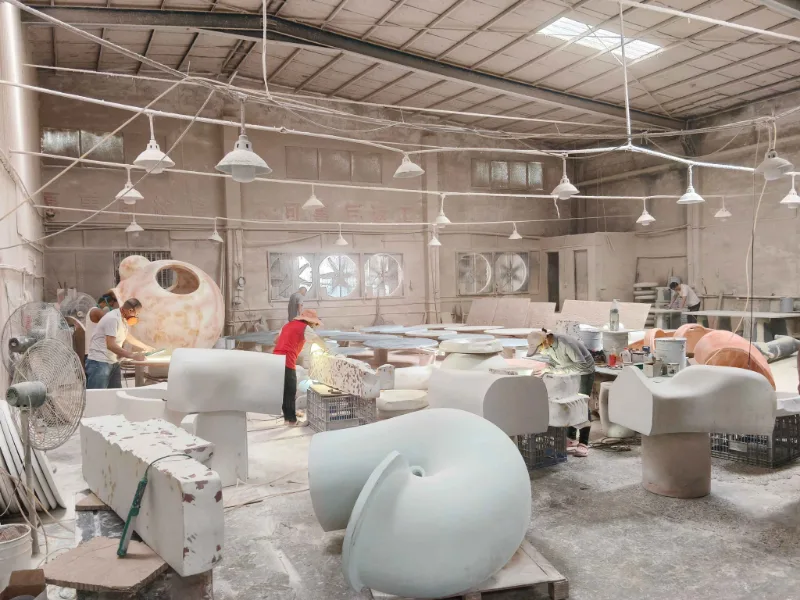
After more than 20 years of FRP manufacturing, we have seen many different types of custom projects—from tables and benches to planters, sculptures and other commercial products. At our factory in Huizhou, Guangdong, we work with overseas buyers who often come to us with the same question: why can two FRP suppliers quote very different prices for what appears to be the same product?
The answer is usually found in the details that cannot be seen from a product photo.
Wall thickness, fiberglass reinforcement, mold construction, surface preparation, finishing and export packing can all affect the final cost and performance of an FRP product. For buyers, these differences are easy to overlook when comparing quotations.
From our experience as an FRP manufacturer, we believe the best way to avoid problems is to understand what is behind the quotation before placing an order.
Here are some of the most common FRP manufacturing pitfalls worth checking.
Choosing the Lowest Price
This is probably the easiest mistake to make.
If three suppliers quote USD 800, USD 1,000 and USD 1,300, the lowest price naturally gets attention.
But are they quoting the same product?
One supplier may use a different wall thickness, reinforcement structure, surface finish or packaging method.
I always recommend comparing the specification behind the price, not just the number.
Assuming the Sample Represents Everything
A good prototype is important, but it is not the end of the process.
For repeat production, the factory must be able to reproduce the same shape, dimensions and finish consistently.
This is where the mold becomes important.
If you are ordering 50 or 100 pieces, ask the supplier how the mold will be made and how it will be used for repeated production.
Thinking “Fiberglass” Is a Complete Material Specification
FRP is not simply one fixed material.
Different products can have different resin systems, fiberglass reinforcement, thicknesses and internal structures.
A decorative indoor product doesn't necessarily need the same construction as an outdoor commercial bench.
So instead of asking only, “What material is it?”, explain the product's actual application.
Forgetting the Outdoor Environment
Outdoor use is another area where misunderstandings happen.
A product installed indoors has very different requirements from one installed in an open-air shopping center or coastal resort.
UV exposure, rain, humidity and temperature changes should all be considered when deciding the surface treatment.
Designing Without Thinking About Shipping
Large FRP products can be manufactured as one piece but still be difficult or expensive to transport.
For oversized furniture and sculptures, we sometimes recommend dividing the product into two or three sections.
This can make packing, container loading and installation much easier.
The transportation plan should therefore be considered before the final design is locked.
Not Confirming the Mold
For custom FRP projects, buyers should clarify the mold arrangement before production.
For example:
· Is a new mold required?
· Who pays for the mold?
· Can it be reused?
· Can it be used for future orders?
· Is a prototype included?
· How are modifications handled?
These questions are particularly important when the product will be reordered.
Looking Only at Finished Photos
A supplier may have beautiful product photos, but photos alone don't prove manufacturing capability.
For a serious B2B project, I would ask to see some production evidence:
mold making → fiberglass forming → sanding → painting → inspection → packing
This gives you a much better idea of whether the supplier actually has the production experience required for your project.
One Simple Rule
For me, the biggest FRP purchasing mistake is simple:
Don't compare suppliers until you have defined the product clearly.
Dimensions, application, structure, finish, quantity, packaging and delivery requirements should be clear first.
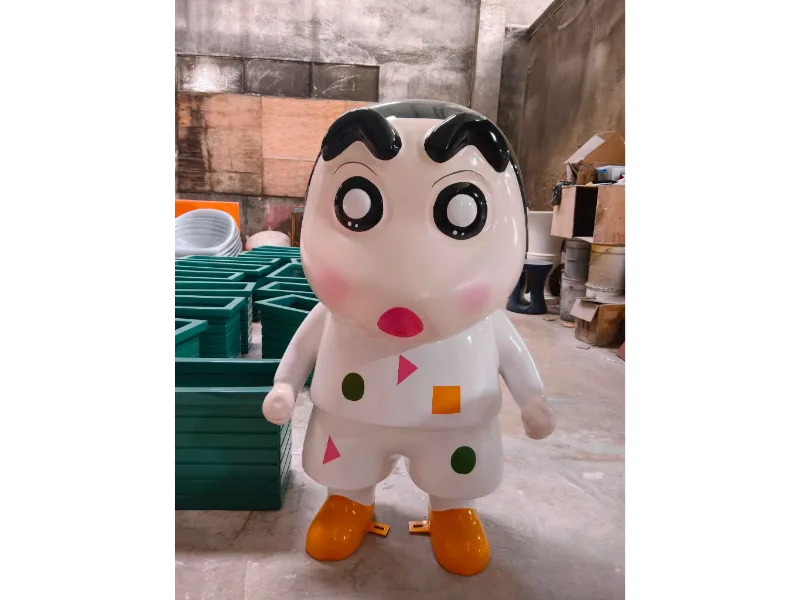
At Chinor, we have been manufacturing FRP products in Huizhou, Guangdong for more than 20 years, including furniture, benches, tables, planters and sculptures.
If you are currently comparing FRP suppliers, send us your reference image or drawing. We can help you identify the key specifications before production.
Send Inquiry
-
WhatsApp
-
E-mail
-
Wechat