
- English
- Español
- Português
- русский
- Français
- 日本語
- Deutsch
- tiếng Việt
- Italiano
- Nederlands
- ภาษาไทย
- Polski
- 한국어
- Svenska
- magyar
- Malay
- বাংলা ভাষার
- Dansk
- Suomi
- हिन्दी
- Pilipino
- Türkçe
- Gaeilge
- العربية
- Indonesia
- Norsk
- تمل
- český
- ελληνικά
- український
- Javanese
- فارسی
- தமிழ்
- తెలుగు
- नेपाली
- Burmese
- български
- ລາວ
- Latine
- Қазақша
- Euskal
- Azərbaycan
- Slovenský jazyk
- Македонски
- Lietuvos
- Eesti Keel
- Română
- Slovenski
- मराठी
- Srpski језик

How Can You Tell If an FRP Supplier Can Really Handle Your Custom Project?
At Chinor, we have been manufacturing FRP products in Huizhou, Guangdong for more than 20 years. Our factory produces FRP furniture, benches, tables, planters, sculptures and other customized products for commercial projects. Over the years, we have worked with different designs, sizes, materials and finishing requirements, and one thing we have learned is that making a custom FRP product is very different from simply copying a product photo.
Finding an FRP supplier is easy.
Finding one that can actually turn your design into a stable, repeatable commercial product is more difficult.
When we receive a custom project, we don't look only at the final appearance. We also consider how the product will be designed, molded, reinforced, finished, inspected and eventually packed for shipment.
I've worked with many customized FRP projects, and I think the best way to evaluate a supplier is to look at the whole production process, not just the final product photo.
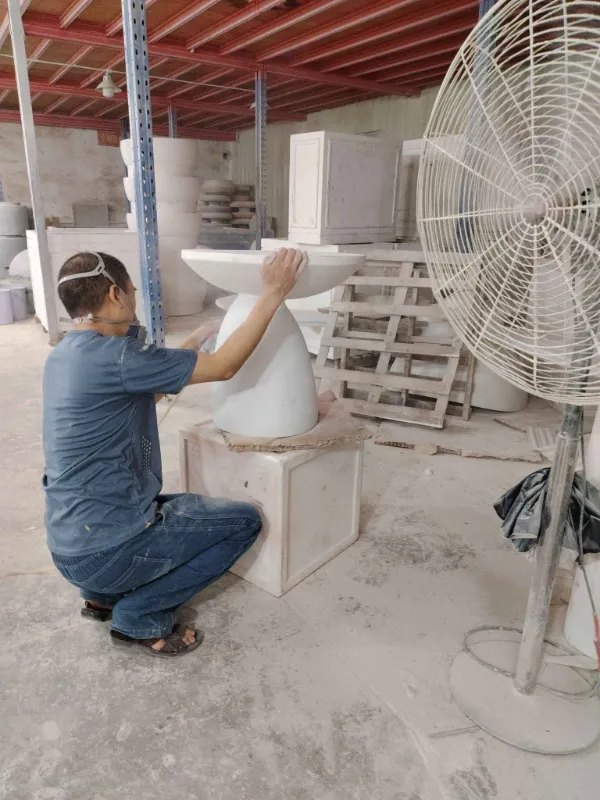
Start With the Design
Send the supplier your reference image, drawing or 3D file.
Then see what questions they ask.
For a complicated product, a capable factory will usually want to know the dimensions, application, quantity, finish and delivery requirements.
If a supplier gives you a price immediately without discussing any of these points, I would be careful.
Ask About the Mold
For customized FRP products, the mold can have a major influence on both cost and production consistency.
Depending on the product, CNC machining may be used to create the initial mold.
For a one-off sculpture, the production method may be different from a product that needs to be manufactured hundreds of times.
The supplier should be able to explain why a particular mold solution is suitable for your project.
Take the Prototype Seriously
The prototype is where the design becomes a physical product.
Check:
· Overall dimensions
· Shape
· Proportions
· Stability
· Surface quality
· Color
· Details
If something is wrong, it is much easier to modify one prototype than an entire production batch.
For this reason, I don't recommend rushing through sample approval just to save a few days.
Ask What's Inside
A finished FRP product can hide a lot of its manufacturing details.
For large benches, tables or sculptures, ask about the internal structure.
Depending on the design, this may include fiberglass reinforcement, steel reinforcement, support structures or mounting points.
The exact construction should be determined according to the product rather than using one standard structure for everything.
Look at the Production Process
If possible, ask the supplier for actual factory photos.
Look for:
· Mold preparation
· Fiberglass forming
· Demolding
· Trimming
· Sanding
· Painting
· Finished products
· Packing
These photos can tell you much more than a catalog filled with finished product images.
A supplier doesn't need to show every detail, but they should be able to explain how your product will actually be manufactured.
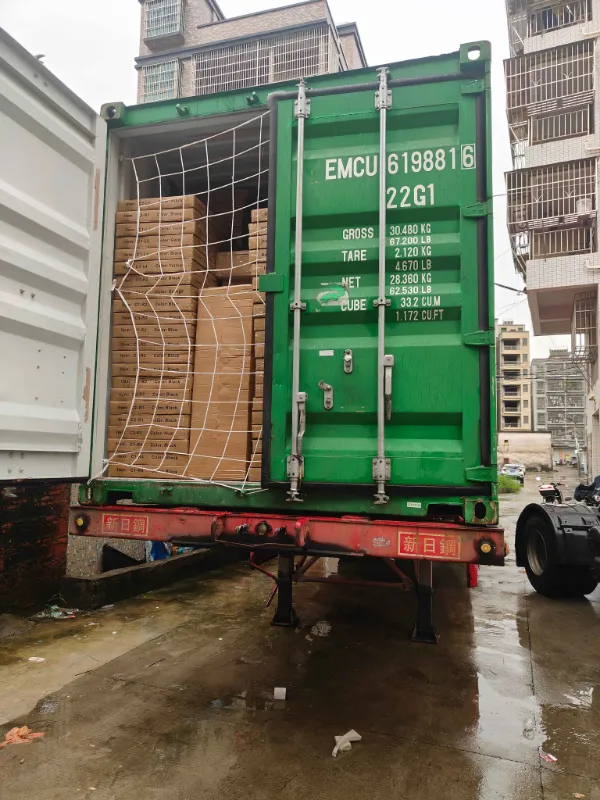
Check Production Consistency
A factory that can make one beautiful sample is not necessarily a factory that can make 100 identical products.
For repeat orders, ask how the approved sample, mold and production specifications will be used to maintain consistency.
This becomes particularly important for furniture projects, retail displays, seasonal decorations and commercial installations.
Don't Forget Quality Control and Packing
The final inspection should cover dimensions, surface quality, color, structure and other agreed specifications.
Then comes packing.
FRP products can have unusual shapes, large dimensions and fragile finished surfaces, so export packing needs to be considered carefully.
For oversized products, the best solution may even involve designing the product in several transportable sections.
The Supplier Should Understand More Than FRP
For a custom project, I don't think manufacturing ability is enough.
The supplier also needs to understand the buyer's actual situation:
How will the product be used?
Where will it be installed?
How many pieces are required?
How will it be transported?
Will it be reordered?
These questions affect the production solution.
At Chinor, we have more than 20 years of FRP manufacturing experience in Huizhou, Guangdong. We work on customized FRP furniture, sculptures, planters, tables, benches and other commercial products, including OEM and ODM projects.
If you already have a drawing, 3D file or reference image, send it to us. We can review the design from a manufacturing perspective before you move forward.
Send Inquiry
-
WhatsApp
-
E-mail
-
Wechat