
- English
- Español
- Português
- русский
- Français
- 日本語
- Deutsch
- tiếng Việt
- Italiano
- Nederlands
- ภาษาไทย
- Polski
- 한국어
- Svenska
- magyar
- Malay
- বাংলা ভাষার
- Dansk
- Suomi
- हिन्दी
- Pilipino
- Türkçe
- Gaeilge
- العربية
- Indonesia
- Norsk
- تمل
- český
- ελληνικά
- український
- Javanese
- فارسی
- தமிழ்
- తెలుగు
- नेपाली
- Burmese
- български
- ລາວ
- Latine
- Қазақша
- Euskal
- Azərbaycan
- Slovenský jazyk
- Македонски
- Lietuvos
- Eesti Keel
- Română
- Slovenski
- मराठी
- Srpski језик
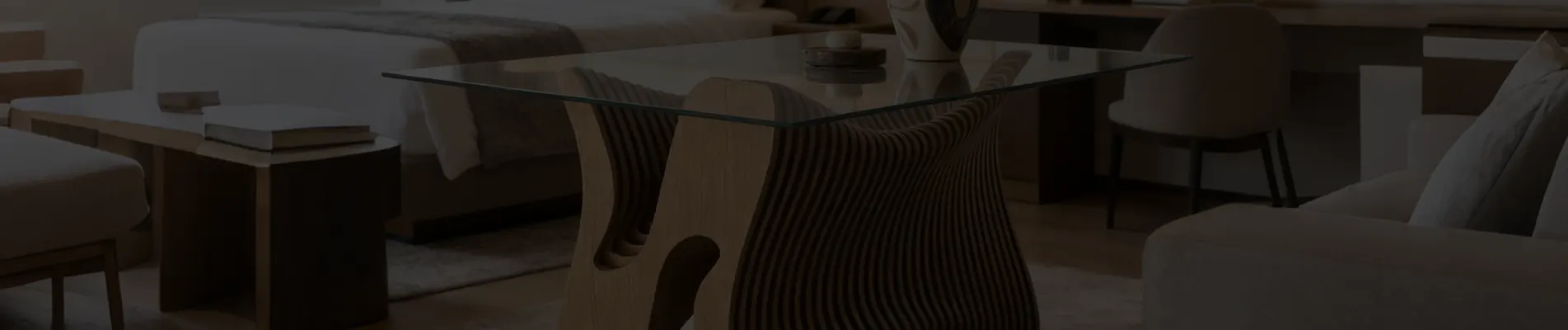
Why Is FRP Ideal for Custom Furniture?
Why Do Designers Choose FRP for Custom Furniture?
At Chinor, we manufacture FRP furniture in Huizhou, Guangdong, China. With more than 20 years of FRP production experience, we work on a wide range of products, including tables, chairs, benches, planters and sculptures. Some designs are simple and functional, while others involve flowing curves, oversized forms or shapes that are difficult to produce using conventional materials.
When designers ask us whether fiberglass is suitable for a particular project, we look beyond appearance. We consider the shape, intended use, structural requirements and final finish. These factors help determine whether FRP furniture is the right solution.
What Makes FRP Different from Traditional Materials?
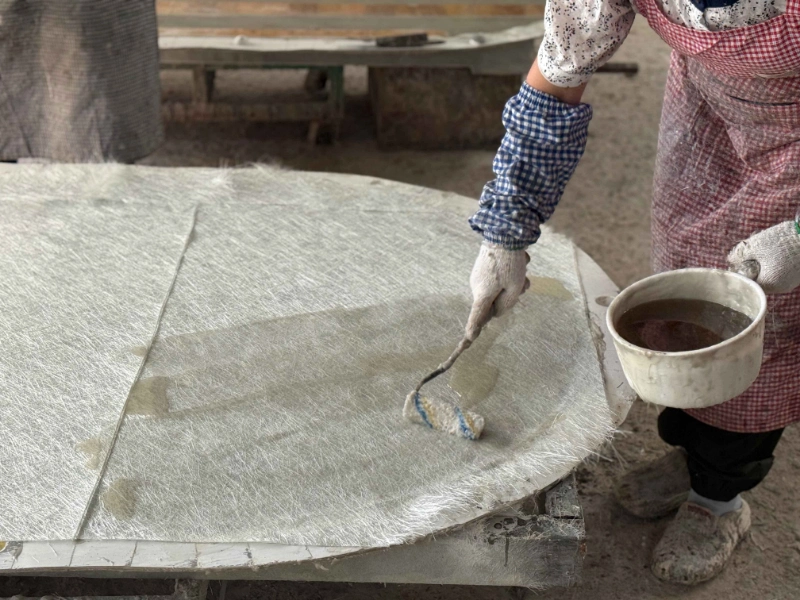
FRP stands for fiber-reinforced plastic. In our products, glass fibers provide reinforcement, while resin binds the fibers together to form a composite material.
Unlike solid wood or stone, FRP can be formed around a mold to create a wide variety of shapes. Compared with conventional metal fabrication, it can also offer a different route for producing continuous curves and sculptural forms.
However, FRP is not a single material with identical properties in every application. Resin type, fiber arrangement, laminate thickness and product structure all affect the final result.
For us, choosing the right specification begins with understanding what the product needs to do. A decorative sculpture, a coffee table and a public seating bench have different requirements.
How Does FRP Make Complex Designs Possible?
One of the biggest advantages of custom FRP furniture is design flexibility.
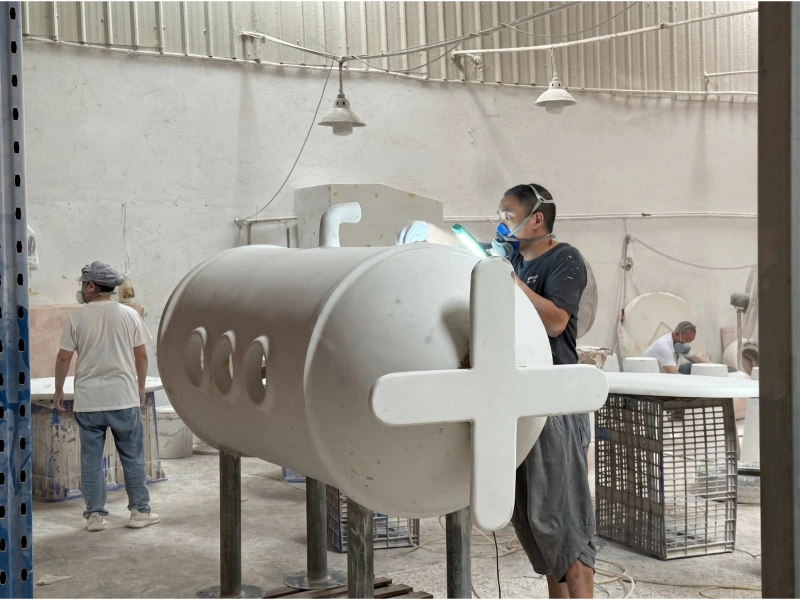
Imagine a bench shaped like an animal, a table with a flowing organic base or a chair with a continuous curved shell. These designs may require complicated fabrication or multiple components when made from other materials. With FRP, a properly designed mold can help reproduce the intended contours and surface details.
This is particularly useful for sculptural furniture, themed commercial spaces and products developed from 3D models or reference images.
There are still practical limits. Deep recesses, undercuts and complicated internal curves can affect mold construction and demolding. We therefore recommend reviewing manufacturing feasibility before finalizing a design.
Is FRP Furniture Strong but Lightweight?
FRP can offer a useful balance between weight and structural performance. A properly designed component may be lighter than a comparable solid-material alternative while providing the rigidity required for its intended application.
But the material itself does not guarantee a particular load capacity. Product geometry, laminate thickness, internal reinforcement and support points all matter.
When we develop a custom bench or table, we consider how the product will be used and where loads will be applied. A decorative display piece does not necessarily need the same construction as furniture used by the public every day.
The goal is to match the construction to the real application rather than simply adding material without a clear reason.
Can FRP Furniture Be Used Outdoors?
Yes, FRP can be used for outdoor furniture when the material system and surface finish are selected for the environment.
For outdoor applications, sunlight, rain, temperature changes and cleaning requirements should all be considered. The resin system, protective coating and manufacturing quality influence how the finished product performs over time.
For example, furniture for a hotel pool area may have different requirements from a decorative table used indoors. Products installed in coastal environments may also need additional consideration.
We recommend discussing the installation location early so that the finish and construction can be specified appropriately.
What Finishes Are Available for Custom FRP Furniture?
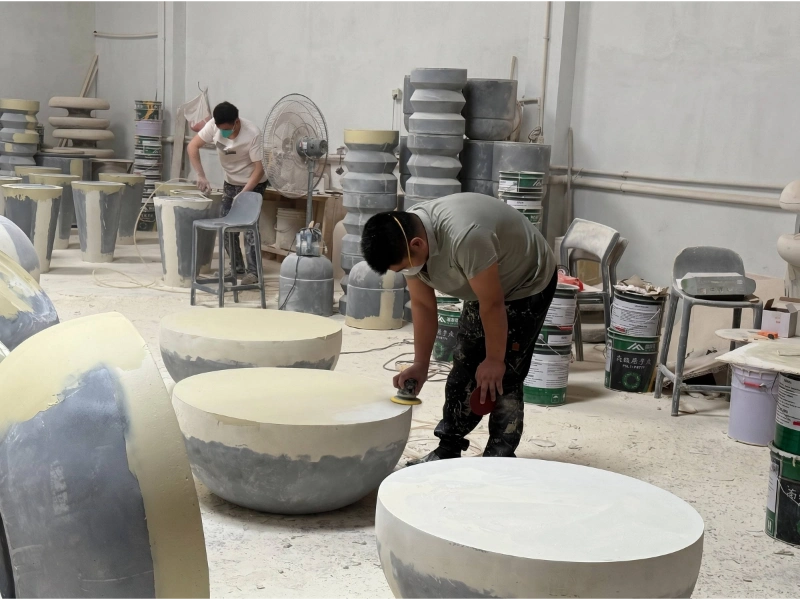
FRP furniture can be produced in a range of colors and surface finishes, from clean matte surfaces to high-gloss colors and more artistic effects.
For commercial projects, the finish often needs to match an interior design scheme, brand identity or architectural concept. Buyers can provide reference photos, RAL color codes or approved samples to communicate their expectations.
For projects with strict appearance requirements, confirming the finish before bulk production can help reduce misunderstandings.
When Should You Consider FRP?
FRP is worth considering when your project involves unusual shapes, sculptural forms, custom dimensions or designs that are difficult to achieve with standard furniture components.
It can be used for commercial seating, decorative tables, planters and custom sculptures. Still, the best material depends on the project's function, budget, finish and expected service conditions.
At Chinor, we work with customers to review these details before production. If you have a sketch, 3D file or reference image, we can discuss how the concept might be developed into a practical FRP product.
FAQ
1. What is FRP furniture made of?
FRP furniture typically combines glass fiber reinforcement with resin. The specific material system depends on the product design and performance requirements.
2. Is fiberglass furniture suitable for outdoor use?
Yes, when the material system, construction and protective finish are appropriate for the intended outdoor environment.
3. Can FRP furniture be made in custom shapes?
Yes. FRP can accommodate many complex forms, including curved benches, sculptural tables and animal-shaped seating.
4. Is FRP furniture lightweight?
It can be relatively lightweight compared with some solid materials. Actual weight depends on the product's size, laminate thickness and reinforcement.
5. Can Chinor make FRP furniture from a drawing?
Yes. We can review drawings, sketches, 3D files or reference images to assess the design and discuss customization options.
Have a custom furniture concept? Contact Chinor to discuss your design, dimensions, finish and production requirements.
Send Inquiry
-
WhatsApp
-
E-mail
-
Wechat