- English
- Español
- Português
- русский
- Français
- 日本語
- Deutsch
- tiếng Việt
- Italiano
- Nederlands
- ภาษาไทย
- Polski
- 한국어
- Svenska
- magyar
- Malay
- বাংলা ভাষার
- Dansk
- Suomi
- हिन्दी
- Pilipino
- Türkçe
- Gaeilge
- العربية
- Indonesia
- Norsk
- تمل
- český
- ελληνικά
- український
- Javanese
- فارسی
- தமிழ்
- తెలుగు
- नेपाली
- Burmese
- български
- ລາວ
- Latine
- Қазақша
- Euskal
- Azərbaycan
- Slovenský jazyk
- Македонски
- Lietuvos
- Eesti Keel
- Română
- Slovenski
- मराठी
- Srpski језик
How Does a Fiberglass Planter Improve Outdoor Landscape Design Performance?
Imagine the entrance of a five-star luxury hotel—a grand porte-cochère flanked by oversized planters that frame the arrival experience. Or picture a high-end commercial plaza where sleek, modern planters define the pedestrian flow while providing lush greenery. In both scenarios, the planters are not mere containers; they are architectural elements that shape the space. Yet, for decades, landscape architects and designers have been limited by the constraints of traditional planter materials. Concrete planters are heavy and prone to cracking. Ceramic planters are fragile and expensive to ship. Wooden planters rot and require constant maintenance. Metal planters rust and conduct heat that damages plant roots. The design community has long sought a material that combines aesthetic versatility with practical durability. The answer, increasingly, is the Fiberglass Planter.
A Fiberglass Planter—technically a glass fiber reinforced polymer (FRP) composite—is transforming outdoor landscape design by delivering performance that traditional materials simply cannot match. It offers the structural strength of concrete at a fraction of the weight, the design flexibility of a moldable material, and the weather resistance of a marine-grade composite. This article will explore five dimensions of performance where Fiberglass Planters excel: the material science that makes them superior, the logistical advantages of their lightweight strength, the real-world durability that eliminates maintenance concerns, the design freedom that unlocks creative possibilities, and the economic benefits that make them a sound long-term investment. By the end, you will understand why more and more landscape architects, property developers, and designers are specifying Fiberglass Planters for their most important projects.
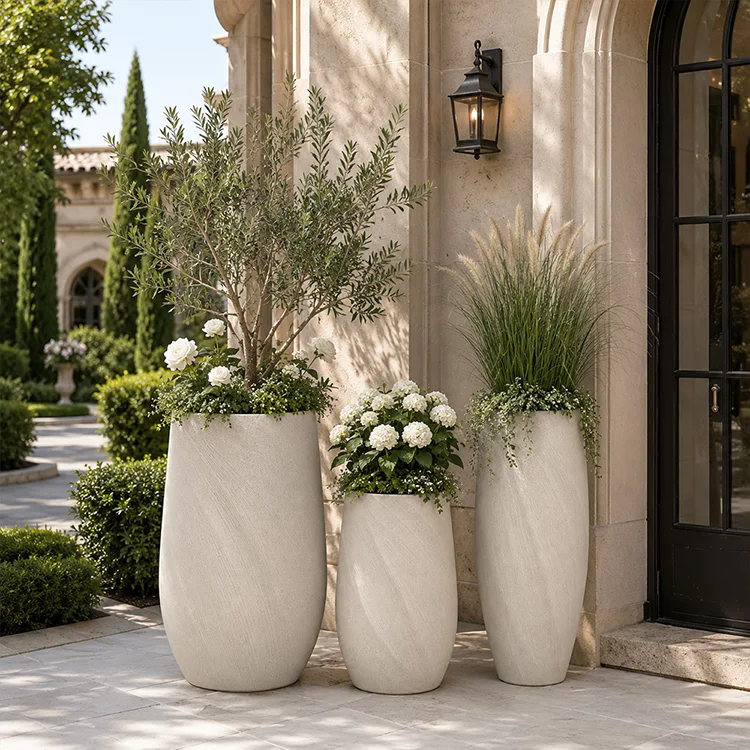
Table of Contents
- 1. What Is a Fiberglass Planter, and What Makes It a Superior Material Choice?
- 2. Why Do Landscape Architects Prefer Fiberglass Planters Over Traditional Materials?
- 3. How Does the Lightweight Strength of Fiberglass Planters Solve Installation and Logistics Challenges?
- 4. What Makes Fiberglass Planters Resistant to Extreme Weather and UV Degradation?
- 5. How Does the Design Freedom of Fiberglass Planters Unlock Creative Possibilities?
- Frequently Asked Questions (FAQ)
- About the Manufacturer
- Conclusion
What Is a Fiberglass Planter, and What Makes It a Superior Material Choice?
A Fiberglass Planter is a container made from glass fiber reinforced polymer (GFRP), a composite material that combines the strength of glass fibers with the stability of a polymer resin matrix. To understand why this material is revolutionizing outdoor landscape design, it helps to think of it as the "high-performance concrete" of the planter world. Just as reinforced concrete uses steel bars to provide tensile strength to brittle concrete, a Fiberglass Planter uses millions of microscopic glass fibers embedded in a resin matrix to provide strength and flexibility to what would otherwise be a brittle plastic. The glass fibers—typically 10-20 micrometers in diameter and arranged in a random mat or woven fabric—provide the tensile strength. The resin, typically an unsaturated polyester or vinyl ester, provides the shape, the surface finish, and the chemical resistance. Together, they create a material that is stronger per unit weight than steel, yet light enough to be moved by hand.
Our factory at Huizhou Chinor Furniture Co., Ltd. has been refining the production of Fiberglass Planter for over two decades. Our process begins with precision mold making—a critical step because the mold determines the final shape, surface texture, and dimensional accuracy of every planter. The glass fiber layers are carefully laid into the mold, and the resin is applied under controlled conditions to ensure complete wet-out of the fibers, eliminating air bubbles that could create weak points. The component is then cured, demolded, and finished through a multi-stage process of trimming, sanding, and polishing. The final step is the application of a gel coat—a specialized pigmented resin layer that provides the color, gloss, and UV protection that defines the planter's appearance. This gel coat is not just paint; it is an integral layer of the composite that is bonded at the molecular level.
The table below provides a comprehensive overview of the key technical specifications for our standard Fiberglass Planter product line. Each specification reflects a design decision based on real-world performance requirements.
| Specification | Value/Description | Why It Matters |
| Material Composition | Glass fiber + unsaturated polyester resin | Provides high strength-to-weight ratio; resistant to chemicals and moisture |
| Gel Coat Thickness | 0.4 – 0.6 mm | Ensures color depth, UV protection, and surface durability; thicker coat resists scratching |
| Total Wall Thickness | 3 – 8 mm (depending on size) | Balances structural strength with weight; larger planters have thicker walls for added rigidity |
| Surface Finish Options | High-gloss, matte, textured, simulated stone, metallic | Allows design alignment with architectural style; textured finishes hide minor scratches |
| UV Resistance | UV-stabilized resin + UV-absorbing additives in gel coat | Prevents yellowing, chalking, and surface degradation over years of sun exposure |
| Operating Temperature Range | -30°C to +80°C | Ensures performance in extreme climates, from freezing winters to desert summers |
| Water Absorption | < 0.5% (by weight, 24-hour immersion) | Prevents water intrusion that could cause freeze-thaw damage or resin degradation |
| Color Options | RAL, Pantone, or custom color matching | Ensures brand consistency and architectural cohesion; full color spectrum available |
| Expected Service Life | 15 – 20 years (outdoor, unprotected) | Industry-leading longevity eliminates the need for frequent replacement |
What makes a Fiberglass Planter truly superior is not any single specification, but the combination of properties that no traditional material can match. It is as strong as concrete yet a fraction of the weight. It is as elegant as ceramic yet virtually unbreakable. It is as natural-looking as wood yet completely rot-proof. And it can be molded into shapes that would be impossible or prohibitively expensive with any other material. This is why the Fiberglass Planter is no longer a niche product; it has become the standard for high-performance outdoor landscaping.
Why Do Landscape Architects Prefer Fiberglass Planters Over Traditional Materials?
To understand why landscape architects are increasingly specifying Fiberglass Planters, it is useful to step into the shoes of a designer working on a challenging project. Consider the case of a luxury beachfront resort project in Southeast Asia. The architect envisions a series of large, sculptural planters that will define the entrance plaza and create a sense of arrival. The site is less than 50 meters from the ocean. Salt spray is constant. The tropical sun is intense. The planters must be large enough to accommodate mature palm trees, yet they must not overwhelm the delicate aesthetic of the resort. The designer's initial thoughts turn to traditional materials, but each presents a fatal flaw.
Concrete planters would be heavy—too heavy to move once installed, requiring a crane and specialized rigging. Worse, the salt spray would corrode the reinforcing steel, causing cracking and spalling within a few years. Ceramic or terracotta planters would offer the desired aesthetic, but in that size, they would be prohibitively expensive, fragile during shipping, and prone to cracking from thermal stress. Wooden planters would be visually warm, but the humidity and salt would cause rapid decay; they would need replacement within three to five years. Metal planters, whether steel or aluminum, would rust or corrode in the salt air, and their high thermal conductivity would transfer heat to the soil, potentially damaging plant roots.
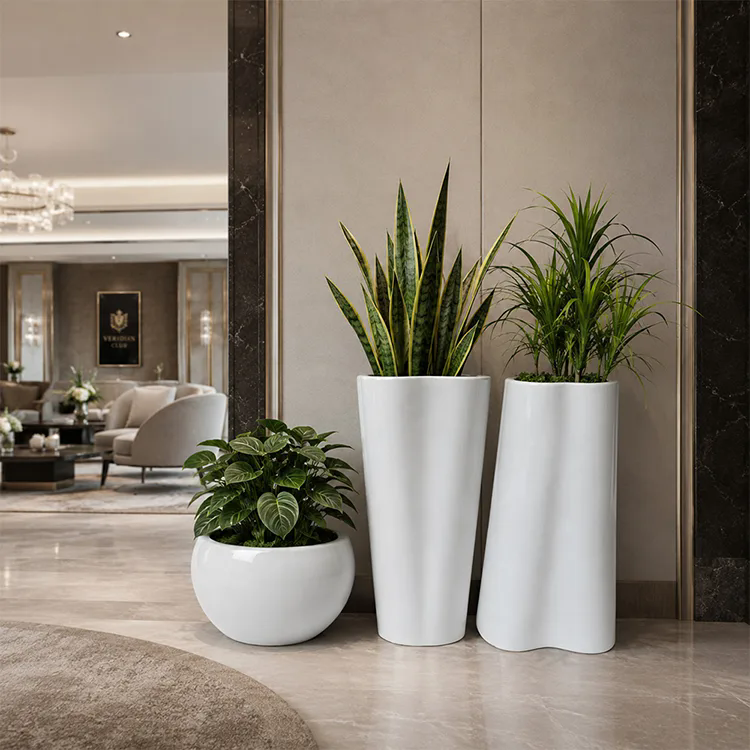
The designer discovers the Fiberglass Planter. It weighs a fraction of concrete, can be molded into the exact desired shape, resists salt spray indefinitely, does not conduct heat, and comes in any color. The decision is clear. This scenario is not hypothetical; it plays out in design firms around the world every day. The following table summarizes the design professional's comparison of Fiberglass Planters against the traditional alternatives.
| Material | Weight (Relative) | Durability (Outdoor) | Design Flexibility | Maintenance | Overall Score |
| Fiberglass Planter | Light | Excellent (15+ years) | Unlimited | Zero | ★★★★★ |
| Concrete | Very Heavy | Good (cracks) | Limited | Sealing required | ★★☆☆☆ |
| Ceramic/Terracotta | Heavy | Poor (fragile) | Moderate | Frequent replacement | ★★☆☆☆ |
| Wood | Moderate | Poor (rots) | Moderate | Sealing, painting | ★★☆☆☆ |
| Metal (Steel/Aluminum) | Moderate | Fair (corrosion) | Limited | Coating, painting | ★★★☆☆ |
What this table reveals is that the Fiberglass Planter does not just match the performance of traditional materials; it exceeds them in nearly every category. It offers the designer a solution that is simultaneously lightweight, durable, flexible, and maintenance-free. In an industry where project lifecycles are measured in decades and client satisfaction is paramount, the Fiberglass Planter is not just a preference; it is a competitive advantage.
How Does the Lightweight Strength of Fiberglass Planters Solve Installation and Logistics Challenges?
One of the most underappreciated aspects of the Fiberglass Planter is the logistical advantage conferred by its remarkable strength-to-weight ratio. In the world of landscape construction, weight is not just a number; it is a cost driver, a safety concern, and a constraint on design. Consider a rooftop garden project on a commercial building. The structure was designed with a certain dead load capacity. Every kilogram of planter, soil, and plant contributes to that load. With concrete planters, the weight of the planters alone can consume a significant portion of the available load allowance, limiting the size and number of planters that can be installed. With Fiberglass Planters, the weight is dramatically lower, allowing for larger, more impactful plantings without expensive structural reinforcement.
To illustrate, let us compare a large planter of 80cm diameter and 80cm height. A concrete planter of this size would weigh approximately 250 kilograms. A Fiberglass Planter of identical dimensions weighs approximately 45 kilograms. That is a reduction of over 80%. The implications are immediate and tangible. The concrete planter requires a crane or forklift to position—equipment that may not be accessible on a rooftop or in a pedestrianized plaza. It requires a reinforced floor. It requires multiple workers for installation, increasing labor costs and the risk of injury. The Fiberglass Planter, by contrast, can be moved by two workers without mechanical assistance. It can be installed on a standard roof structure without reinforcement. It can be repositioned during the design phase without significant cost.
Beyond installation, lightweight strength offers logistical benefits in shipping and handling. A shipping container that can hold twenty concrete planters can hold over one hundred Fiberglass Planters of the same volume, dramatically reducing shipping costs and the carbon footprint of the project. In international projects, where shipping costs can exceed the cost of the product, this advantage is transformative. Our factory at Chinor Furniture has structured its packaging and logistics to maximize the benefits of this lightweight nature, ensuring that our Fiberglass Planters arrive at project sites efficiently and safely.
The following table provides a quantitative comparison of the logistics and installation parameters for a typical 80cm diameter planter across different materials.
| Parameter | Fiberglass Planter | Concrete Planter | Advantage |
| Weight (kg) | 45 | 250 | 82% lighter |
| Workers required for installation | 2 | 4 + equipment | 50% labor reduction |
| Time to install (per unit) | 5 minutes | 25 minutes | 80% time reduction |
| Shipping cost (same volume) | $X | $3.5X | 70% cost reduction |
| Structural load (per m²) | 1.2 kN | 6.5 kN | 82% load reduction |
What Makes Fiberglass Planters Resistant to Extreme Weather and UV Degradation?
Outdoor landscape elements are subjected to a harsh and relentless assault. Ultraviolet radiation from the sun degrades polymers, causing them to yellow, chalk, and lose structural integrity. Temperature cycles cause expansion and contraction that can crack brittle materials. Moisture, whether from rain, irrigation, or humidity, promotes corrosion, rot, and freeze-thaw damage. The Fiberglass Planter is engineered to withstand all of these threats, offering a durability that is unmatched by traditional materials.
To understand this durability, we must look at the aging process. In our factory's laboratory, we conduct accelerated aging tests on our Fiberglass Planters. The most rigorous test involves subjecting the planter to 1,000 hours of UV exposure in a QUV accelerated weathering tester. This exposure is equivalent to three to five years of outdoor exposure in a subtropical climate. The test measures two critical parameters: color change (delta E) and gloss retention. Our Fiberglass Planter consistently achieves a delta E of less than 2.0 (imperceptible to the human eye) and a gloss retention of over 90% of the original value. In practical terms, this means that a planter installed in a sunny location will maintain its appearance for years without fading or dulling.
What is the technical basis for this exceptional durability? It is the result of a multi-layered defense strategy. The outermost layer is the gel coat, which is formulated with UV absorbers and hindered amine light stabilizers (HALS) that absorb UV radiation and neutralize the free radicals that would otherwise degrade the resin. Beneath the gel coat, the resin matrix itself is a UV-stabilized formulation that resists photodegradation. The glass fibers, being inorganic, are inherently UV-stable and do not degrade. The result is a composite that is intrinsically resistant to UV damage, not just coated with a paint that can peel or fade.
The Fiberglass Planter also excels in moisture resistance. The resin matrix encapsulates the glass fibers, preventing water intrusion. The water absorption of our Fiberglass Planter is less than 0.5% by weight after 24-hour immersion. This is critical because absorbed water can cause freeze-thaw damage, where water trapped in the material expands upon freezing, causing cracking. It also prevents the growth of mold or mildew on or within the material. The table below compares the weather resistance of a Fiberglass Planter against traditional materials in key environmental stress categories.
| Environmental Stress | Fiberglass Planter | Concrete | Wood | Metal |
| UV Resistance | Excellent (UV-stabilized) | Good (surface erosion) | Poor (turns grey, cracks) | Good (with coating) |
| Freeze-Thaw Resistance | Excellent (flexible) | Poor (cracks) | Poor (splits) | Good (ductile) |
| Salt Spray Resistance | Excellent (inert) | Poor (corrosion of rebar) | Poor (rot) | Poor (rust) |
| Chemical Resistance (Fertilizers) | Excellent | Good | Fair | Poor |
| Mold/Mildew Resistance | Excellent | Good | Poor | Good |
How Does the Design Freedom of Fiberglass Planters Unlock Creative Possibilities?
Perhaps the most transformative advantage of the Fiberglass Planter is not its strength or durability, but the design freedom it provides to landscape architects and designers. Traditional materials impose constraints: concrete requires formwork, metal requires stamping or welding, wood requires joinery. The Fiberglass Planter, by contrast, is molded. And a mold can be shaped into virtually any form imaginable. This simple distinction has profound implications for design.
Imagine a project where the architect envisions a planter that is not a simple cylinder or rectangular box, but a flowing, organic shape that echoes the curves of a building's façade. With concrete, creating such a form would require an elaborate, one-off formwork—time-consuming and costly. With fiberglass, a mold is created directly from the architect's 3D model, and the planter is produced exactly to the design intent. The cost of producing the mold is a fraction of the cost of creating equivalent one-off formwork, and the fiberglass planter will be lighter, stronger, and more durable than the concrete equivalent. This is the power of mold-based manufacturing.
The range of possible forms is limited only by the designer's imagination and the physics of the molding process. Our factory has produced Fiberglass Planters in shapes that are asymmetrical, twisted, tapered, and multi-lobed. We have created planters with integrated seating, planters that double as water features, and planters that form modular systems capable of defining entire public spaces. The surface finish can be high-gloss, matte, textured, or even simulated stone or wood grain. The color can be any color in the Pantone spectrum. This level of customization is impossible with any other material at comparable cost and weight.
To illustrate the design potential, consider the following matrix of design possibilities that a Fiberglass Planter enables.
| Design Element | Fiberglass Planter Capability | Traditional Material Limitation |
| Shape Complexity | Any shape—curvilinear, asymmetric, organic | Concrete: requires expensive formwork; Metal: requires stamping or welding; Wood: joinery limits complexity |
| Surface Texture | Smooth, textured, wood-grain, stone-effect, custom patterns | Concrete: limited to as-cast texture; Metal: limited to stamped patterns; Wood: limited by grain and joinery |
| Color Consistency | Integral color (gel coat), any RAL or Pantone match, no painting required | All materials: require painting or staining, which can chip or fade |
| Scale | From small tabletop to monumental (2m+ diameter) | Concrete: heavy and difficult to move; Ceramic: limited by kiln size |
| Integration | Can incorporate built-in lighting, irrigation, or seating | All materials: integration requires complex post-processing |
In practice, this design freedom translates into more distinctive, more memorable landscapes. A plaza defined by a series of uniquely shaped Fiberglass Planters is not just a functional space; it is a signature environment. Our factory has completed over 800 commercial projects globally, and in many of these, the Fiberglass Planter was the defining element that distinguished the project. Whether it is a hotel entrance, a corporate campus, or a public park, the Fiberglass Planter delivers a design performance that is as much about art as it is about horticulture.
Frequently Asked Questions (FAQ)
Question 1: How long will a Fiberglass Planter last in outdoor conditions without protection?
Answer: Under normal outdoor conditions, our Fiberglass Planter has an expected service life of 15 to 20 years without any protective coating or maintenance. The UV-stabilized gel coat and resin matrix provide intrinsic protection against UV degradation, moisture, and temperature cycles. In our accelerated aging tests, equivalent to 3-5 years of outdoor exposure, the planters showed no structural degradation and minimal color change. With proper handling and occasional cleaning, many of our planters installed in the early 2000s are still in service today.
Question 2: Will the color of a Fiberglass Planter fade over time?
Answer: Our Fiberglass Planters are finished with a pigmented gel coat that is formulated with UV absorbers and stabilizers. This gel coat is not a surface coating; it is an integral layer of the composite that is bonded at the molecular level. While all outdoor materials experience some degree of color change over time, our gel coat resists fading significantly better than paint or stain. In normal outdoor conditions, the color will maintain its appearance for 10-15 years before any perceptible fading occurs, and the fading will be gradual and uniform, avoiding the patchy appearance seen with painted surfaces.
Question 3: How can a Fiberglass Planter be secured to prevent tipping in high winds?
Answer: While our Fiberglass Planters are lightweight, they are also sturdy and can be secured in several ways. For locations prone to high winds, we recommend adding drainage gravel or a concrete base layer to the bottom of the planter to lower the center of gravity. For permanent installations, we can incorporate anchor holes in the base during manufacturing, or we can produce planters with a heavier base section. For rooftop applications, we recommend using our "wind-rated" series, which includes an integrated anchor flange for bolting to the structure. The planter itself is structurally robust and will not shatter if toppled, but we recommend securing larger units as a best practice.
Question 4: Can I order a Fiberglass Planter in a custom size, shape, or color?
Answer: Absolutely. Customization is one of the core advantages of the Fiberglass Planter. We can produce planters in virtually any size, shape, and color. Our process begins with your design brief—whether it is a CAD file, a sketch, or a physical reference sample. We create a 3D model, produce a mold, and manufacture the planters to your exact specifications. We can match any RAL or Pantone color, and we can replicate textures such as stone, wood grain, or custom patterns. There is no minimum order quantity for custom designs, although mold costs are amortized over the order quantity. Our factory has completed custom projects for some of the world's most renowned architectural firms.
Question 5: How do I clean and maintain a Fiberglass Planter?
Answer: The maintenance of a Fiberglass Planter is minimal. For routine cleaning, simply wash the surface with a mild detergent and water using a soft cloth or sponge. Avoid abrasive cleaners or scouring pads, which can scratch the gel coat. For stubborn stains, a non-abrasive automotive polish can be used. The planter will retain its gloss and color without any need for painting, sealing, or waterproofing. Unlike wood, it does not require staining or sealing; unlike metal, it does not require painting to prevent rust; unlike concrete, it does not require sealing to prevent moisture ingress. This zero-maintenance characteristic is one of the most compelling reasons for specifying Fiberglass Planters in commercial and high-end residential projects.
About the Manufacturer
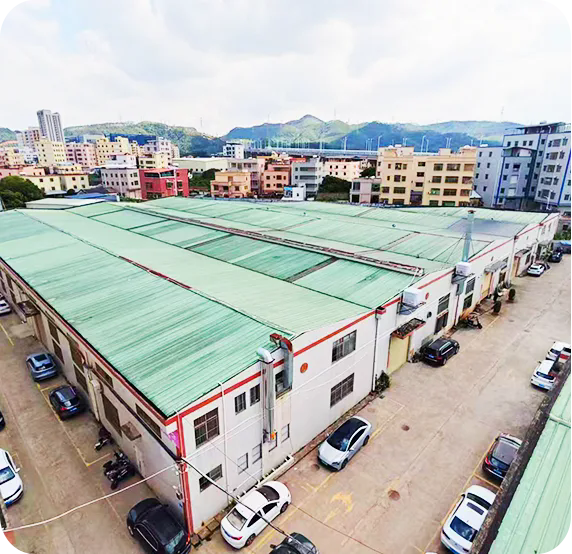
Huizhou Chinor Furniture Co., Ltd. (Brand: CHINOR) has 20 years of experience in fiberglass furniture and art components, and 10 years of professional export experience. Founded in 2002, our factory in Huizhou spans 8,000㎡ with dedicated workshops for fiberglass molding, 5-axis CNC carving, wood processing, polishing, painting, and packaging. We independently control the entire process from mold making to final assembly. Our core products include fiberglass planters, outdoor furniture, and parametric wooden furniture. We have completed over 800 commercial and villa projects globally, serving more than 320 long-term buyers. Beyond our core lines, we integrate multi-material supply chains for full-space outdoor and office furniture sets for hotels and real estate developers, offering integrated design-to-customs-clearance service.
Conclusion
The Fiberglass Planter is more than a container for plants. It is a design tool that enables landscape architects to realize their creative vision without the compromises imposed by traditional materials. It offers the strength of concrete without the weight, the elegance of ceramic without the fragility, the warmth of wood without the rot, and the sleekness of metal without the corrosion. It is lightweight, durable, weather-resistant, and infinitely customizable. In a world where landscape design increasingly demands performance, durability, and aesthetic excellence, the Fiberglass Planter is not just an option—it is the solution.
If you are planning a commercial project, a hotel landscape, a residential development, or any outdoor space that demands the best, we invite you to explore the possibilities of our Fiberglass Planter collection. With over 20 years of expertise and a global portfolio of completed projects, Chinor Furniture is your trusted partner for high-performance fiberglass solutions. Contact us today to discuss your next project and discover how our Fiberglass Planters can transform your outdoor landscape design.
Send Inquiry
-
WhatsApp
-
E-mail
-
Wechat